
From backpacks and tote bags to pet products, outdoor gear, and sewn accessories, straps and webbing are some of the most commonly used components within sewn products. They support weight, create adjustability, reinforce stress points, and connect hardware systems together.
Because webbing is often treated like a simple trim selection, founders sometimes choose it based primarily on appearance or color. In reality, webbing materials can vary significantly in flexibility, thickness, texture, durability, and overall performance once sewn into a product.
A material that looks correct online may twist during use, feel abrasive during wear, slip through hardware, or create excessive seam bulk during construction. This is one reason webbing selection is usually evaluated alongside hardware systems, construction methods, and usability during the broader product development process.
Need help with a project? Free expert guidance is just a click away.
Curious how sewn products are made? Learn more
What Is Webbing?
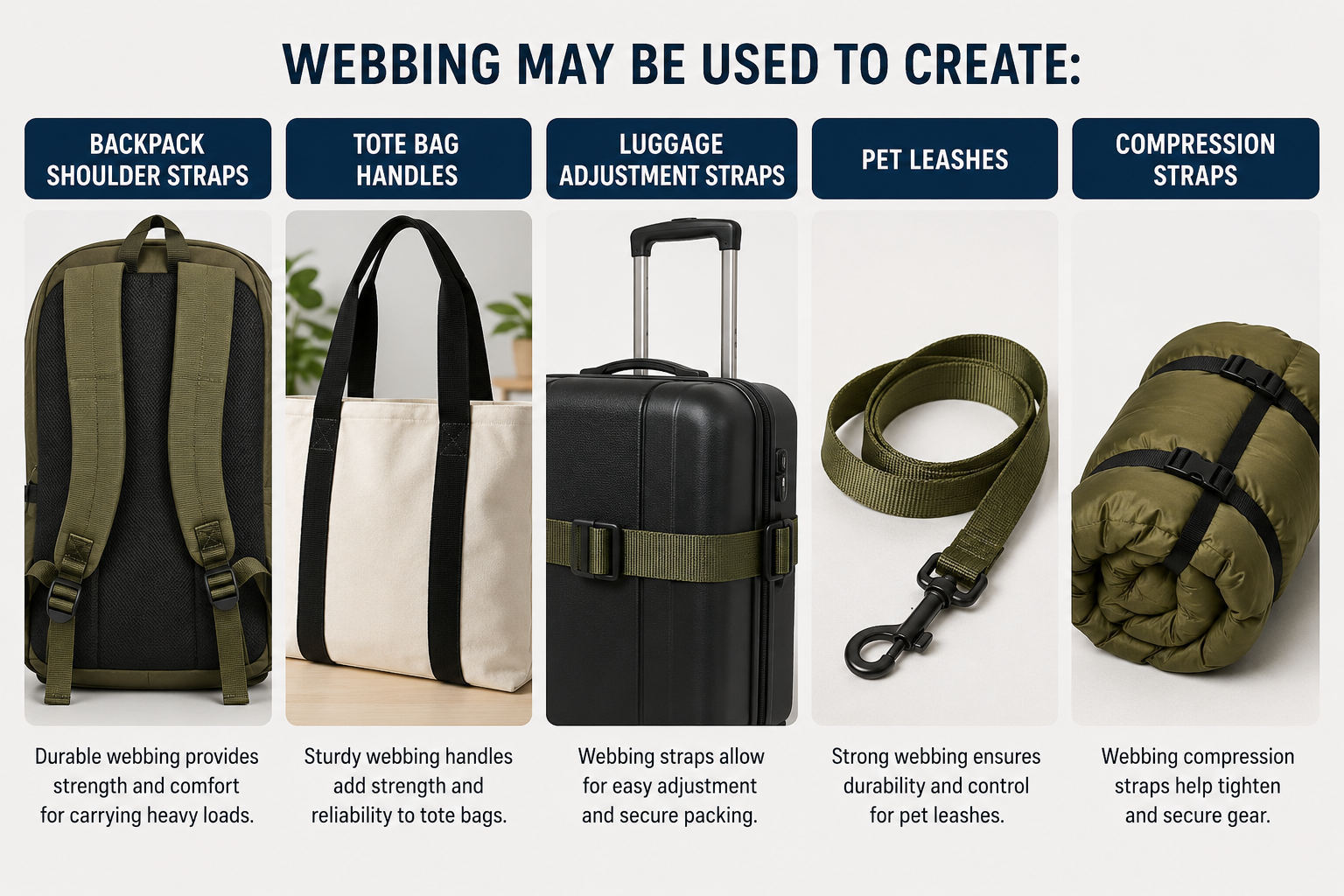
Webbing is a strong, narrow woven material commonly used in straps, handles, reinforcement systems, and adjustable closures. It is widely used in backpacks, bags, luggage, pet products, outdoor gear, and many other sewn products.
The terms “webbing” and “straps” are often used interchangeably, although they technically describe different things. Webbing usually refers to the material itself, while a strap is the finished functional component created from that material within a product.
Common Types of Webbing Materials
Different materials offer different performance characteristics depending on how the product will be used.
Nylon webbing
Nylon webbing is commonly used in backpacks, luggage, and outdoor gear because it is flexible, durable, and highly abrasion-resistant. It is often selected for products that experience repeated movement or heavier loads.
Polyester webbing
Polyester webbing is often used in outdoor and marine applications because it offers strong UV resistance and maintains its shape well over time. It is commonly used when dimensional stability and weather exposure are important considerations.
Polypropylene webbing
Polypropylene webbing is lightweight, moisture-resistant, and generally more cost-effective than nylon. It is commonly used in utility products, outdoor applications, and products where water exposure may occur.
Cotton and Herringbone webbing
Cotton webbing and herringbone constructions are often used in lifestyle and fashion-oriented products where softness, texture, or appearance may be prioritized over heavy-duty performance.
Seatbelt-style webbing is another common construction known for its smooth surface and refined appearance. Although people sometimes refer to it as “strap material,” it is still technically a type of webbing.
What to Evaluate Before Ordering Webbing
Two webbing materials labeled with the same fiber content may still behave very differently once sewn into a product. Small differences in weave density, thickness, flexibility, or finishing can affect comfort, hardware interaction, seam bulk, and overall usability.
Before ordering webbing materials, it is often helpful to evaluate:
Flexibility and stiffness
Thickness and seam bulk
Texture and comfort
Hardware compatibility
Fraying during cutting and sewing
Color consistency
Overall construction quality
These decisions are often explored during material sourcing and refined further through physical sampling and testing.
Why Hardware Compatibility Matters
Webbing rarely functions independently. It is usually designed alongside hardware systems such as:
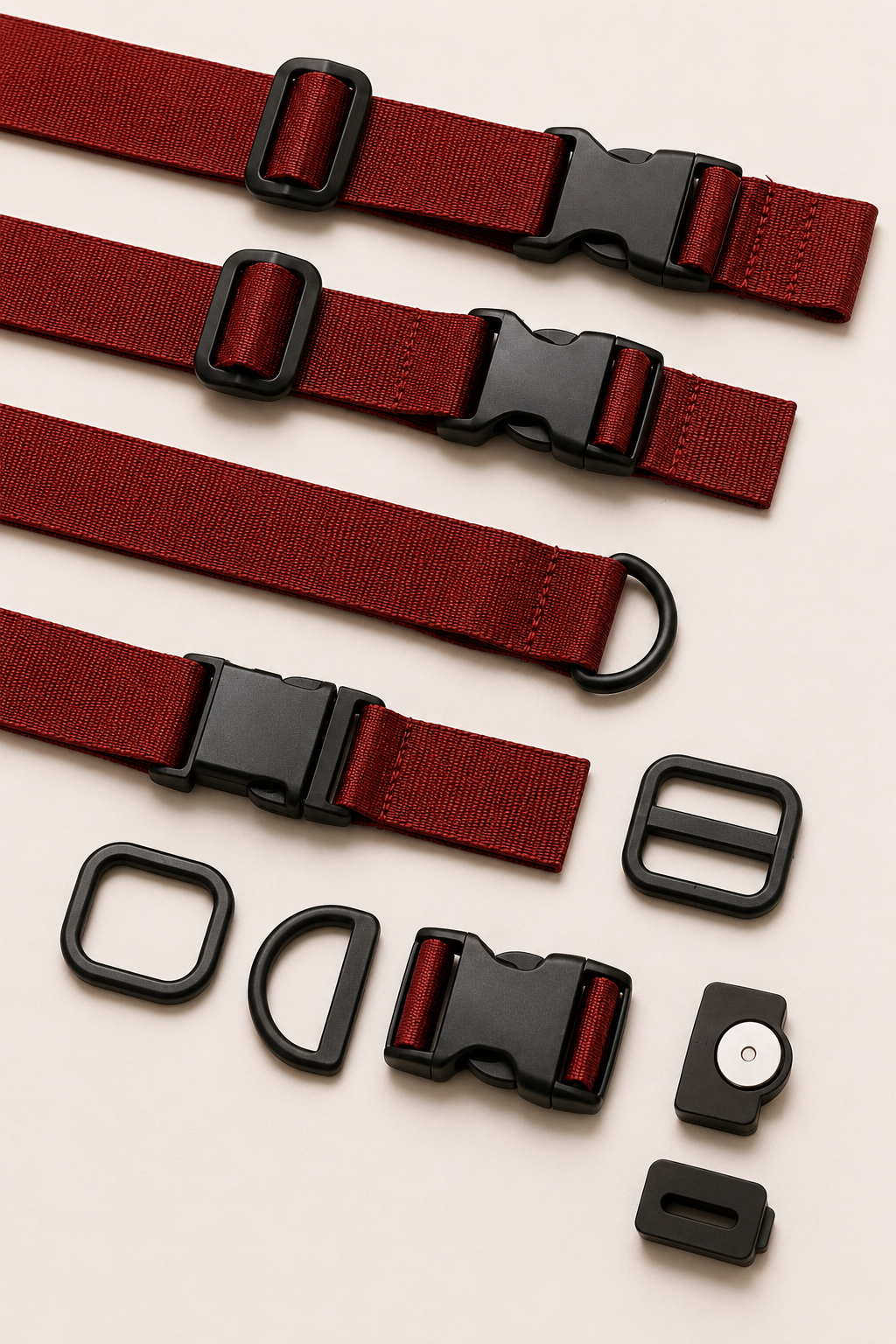
Sliders
Adjusters
Buckles
D-rings
Side-release buckles
Magnetic hardware
If the webbing thickness or flexibility does not properly match the hardware dimensions, the material may twist, slip, bind during adjustment, or wear unevenly over time.
These types of usability problems are often difficult to fully predict on paper, which is one reason physical testing remains an important part of sewn prototyping.
Why Physical Testing Still Matters
A webbing material that looks appropriate during sourcing may behave very differently once sewn into a physical product. Materials may collapse under weight, feel uncomfortable during wear, or create unexpected construction challenges once sewn into multiple layers and hardware systems.
Physical prototypes help evaluate:
Comfort during use
Hardware interaction
Adjustability
Reinforcement methods
Seam construction
Overall usability
Once materials and hardware systems are physically tested and approved, they can then be documented more accurately within the tech pack to help reduce manufacturing guesswork later.
Choosing the Right Webbing for Your Product
Webbing and strap materials may seem like relatively small details within a sewn product, but they have a major influence on comfort, durability, construction, and overall product performance. The right material depends not only on appearance, but also on how the product functions, how it interacts with hardware systems, and how it performs during repeated use. Like many areas of sewn-product development, these decisions are usually strongest when materials are physically evaluated and tested rather than selected from appearance alone.
Need help selecting the right webbing for your prototype or sample run? Book a free video consultation for expert guidance on material sourcing and product development.
Want information like this sent straight to your inbox?
Sign up for our newsletter to receive the latest news, exclusive offers, and insights about our products and services.
You can unsubscribe at any time, and we never share your information with anyone.

Frequently Asked Questions
-
The best webbing depends on how the product will be used, how much weight it needs to support, and the overall feel you want the product to have during use.
Nylon webbing is commonly used for backpacks and heavier products, while cotton or herringbone webbing is often selected for softer lifestyle and fashion-oriented applications.
-
Nylon webbing is generally softer, more flexible, and more abrasion resistant. Polypropylene webbing is lighter weight, more moisture resistant, and usually more cost effective.
Although the materials may look similar visually, they can behave very differently once sewn into a product.
-
Webbing usually refers to the woven material itself, while straps are the finished functional components created from that material within a product.
For example, nylon webbing may be used to create backpack straps, tote handles, or adjustable closures.
Although the materials may look similar visually, they can behave very differently once sewn into a product.
-
Seatbelt webbing is a dense, smooth woven webbing construction known for its refined appearance and durability. Compared to standard utility webbing, it typically has a flatter surface and tighter weave.
Because of its appearance and flexibility, it is commonly used in bags, accessories, pet products, and lifestyle products.
-
Strap width affects both comfort and construction. Wider straps may distribute weight more comfortably, while narrower straps may feel lighter and visually cleaner.
The right width usually depends on the weight of the product, the hardware being used, and how the product will function during wear.
-
Webbing twist and slippage are often caused by incompatibility between the material and the hardware system. Thickness, flexibility, weave density, and hardware sizing can all affect how stable the strap feels during use.
These issues are often difficult to fully predict until the product is physically prototyped and tested.
-
Yes. Material thickness, reinforcement requirements, hardware systems, and seam complexity can all affect sewing time and construction difficulty during manufacturing.
Even relatively small changes in width or hardware configuration may influence production efficiency and overall product cost.
-
Straps and webbing often behave differently once integrated into a physical product than they do during sourcing. Materials may twist, collapse, bind within hardware, or create unexpected seam bulk during construction.
Physical prototyping helps identify these issues before manufacturing begins, reducing the risk of costly revisions later in development.