
Clothing Pattern Maker vs Clothing Sample Maker: What You Need First (and Why It Matters)
If you are getting ready to make your first apparel product, you have probably heard the words "pattern maker" and "sample maker" used as if they mean the same thing. They do not. A clothing pattern maker creates the technical blueprint your garment is built from. A clothing sample maker uses that blueprint to construct a physical prototype you can fit, test, and iterate on. They are two different roles, two different deliverables, and they belong in a specific order.
Knowing the difference between pattern making and sample making is the first thing that separates founders who get to manufacturing on budget from founders who pay twice for the same garment. This guide breaks down what each role delivers, what each step costs, what the correct order is, and what you need to have ready before you contact either one.
Need help with a project? Free expert guidance is just a click away.
Curious how sewn products are made? Learn more
What a Clothing Pattern Maker Does
A clothing pattern maker translates a design idea into the exact 2D shapes that will be cut from fabric and sewn into a garment. A professional pattern is not a sketch and not a measurement chart. It is the engineering document for your product.
A finished pattern includes:
Seam allowances on every edge
Grainline markings
Notches for matching pieces during sewing
Dart placement, ease, and fit allowances
Construction notes (lining, interfacing, closures, hems)
There are two ways most studios produce patterns today:
Digital pattern making in software like Optitex, Gerber, or CLO 3D. Files are plotter-ready and easy to revise, and they hand off cleanly to factories that already cut digitally.
Hand pattern making drafted on paper, then digitized later for grading and production.
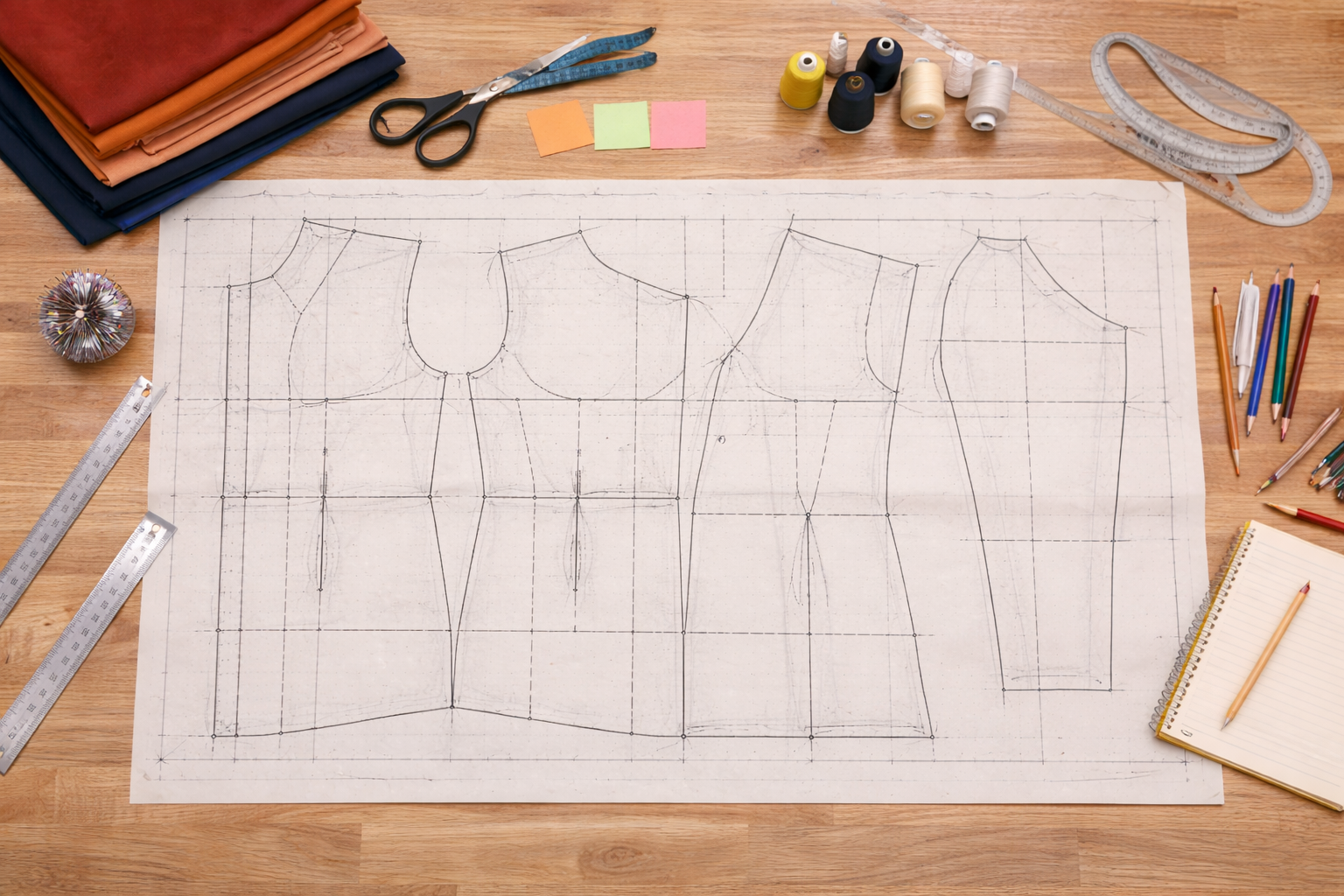
Either way, the deliverable from a qualified clothing pattern maker is a pattern that any factory can read, cut, and sew without having to interpret your intent. For a deeper read on the role of patterns in product development, our explainer on Why Patternmaking Is Essential in Product Development walks through it in more detail.
A first-round pattern on a moderately complex garment typically takes 1 to 3 weeks. Professional patternmaking for a single style usually falls in the $400 to $1,500 range. A jacket with linings, multiple closures, and structured panels costs more than a knit tee.
What a Clothing Sample Maker Does
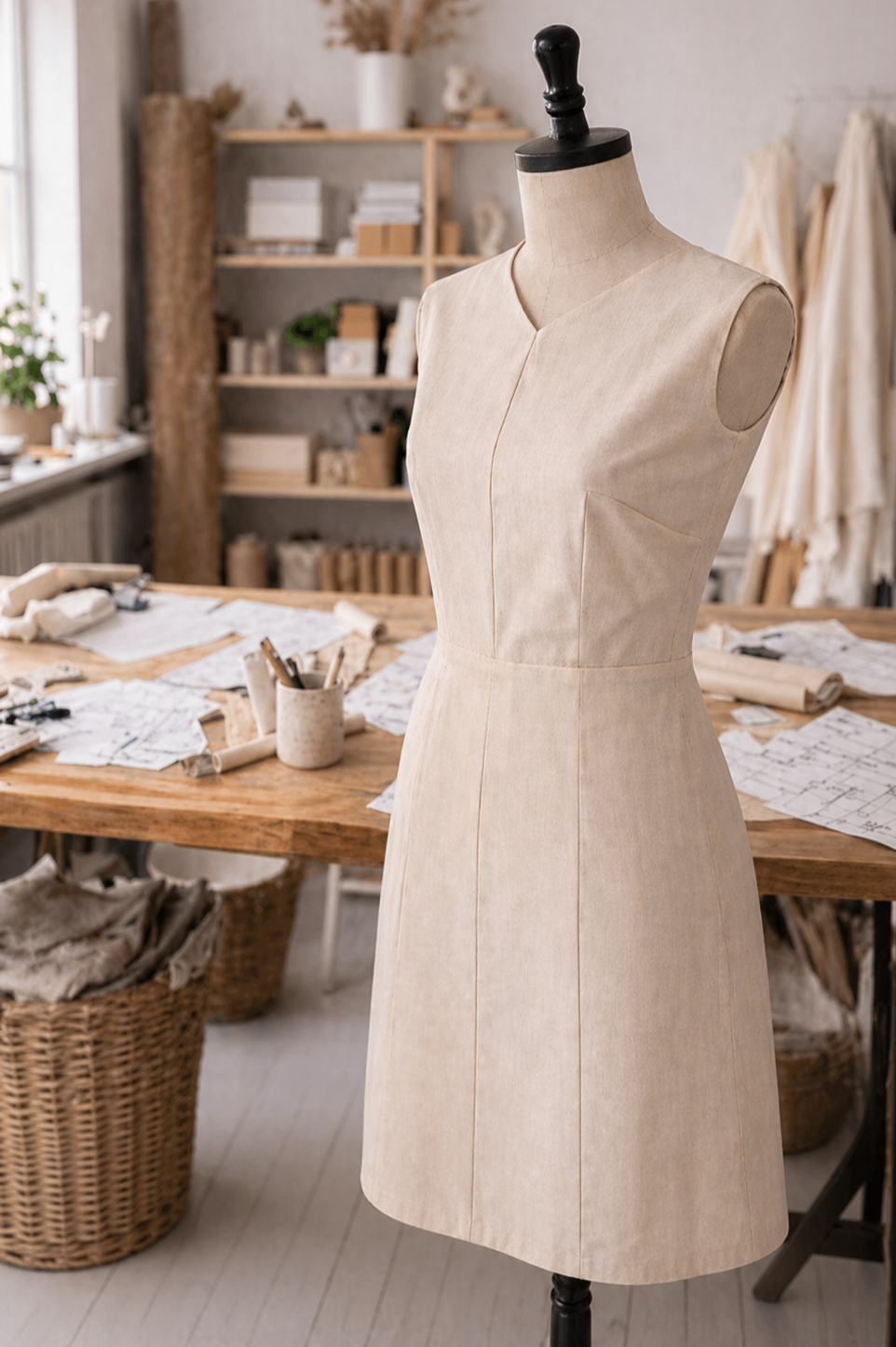
A clothing sample maker constructs a physical garment from the pattern. The first sample is a proof of concept. It answers questions that no flat pattern can:
Does the garment fit a real body the way the measurements predicted?
Does the fabric behave the way the design assumed (drape, stretch, recovery)?
Are the construction methods feasible at the price point you plan to manufacture at?
Do the closures, trims, and finishes work as drawn?
A first sample almost never fits perfectly. That is the point. The sample exists so you and your sample development clothing partner can identify what needs to change, mark it on the garment, and revise the pattern. Most product development cycles include 2 to 3 sample rounds before a pattern is signed off as production-ready.
Sample-making cost depends on the same factors as pattern-making, plus the cost of the fabric and trims you supply. Budget $200 to $800 per sample round for cut and sew labor on a typical garment, fabric and trims on top.
For a deeper read on why this step is not optional, our piece on Three Reasons You Need a Sample Run Before You Move to Production walks through the most common consequences of skipping it.
The Correct Order: Pattern First, Then Sample
The order matters because every sample is built from a pattern. If you commission a "sample" without an underlying professional pattern, what you usually receive is a one-off garment, freehanded or copied from a reference. It may look like what you wanted, but it cannot be reproduced consistently, scaled across sizes, or handed to a factory.
The professional workflow is:
Concept drawing or tech sketch that communicates the design to a pattern maker.
First-round pattern drafted to your specs and target measurements.
First sample sewn from the pattern, usually in a stand-in fabric for early rounds.
Fit session and revisions. You and the pattern maker mark changes on the sample. The pattern is updated.
Second sample in your intended fabric.
Final pattern sign-off once fit, construction, and aesthetics are correct.
Pattern grading to expand the approved pattern into your full size range.
Tech pack built around the finalized pattern, sample, and graded sizes.
Manufacturing with the documentation a factory needs to produce consistently.
If you are weighing whether you also need pattern grading services, treat grading as a separate step that happens after fit is approved, not before. Grading scales a correct pattern. It cannot fix one.
Common Mistakes Founders Make
These are the errors that cost the most time and money in the pattern and sample stages:
Asking a manufacturer to make the pattern - Factories that do offer this typically optimize for their own machinery, not your design intent. The pattern stays with them. If you ever switch factories, you start over. Our post on the Top 9 Mistakes New Product Designers Make covers this in more detail.
Trying to skip patterns and go straight to "samples" - What gets produced is a single garment built off references or measurements with no underlying technical document. There is nothing to revise, nothing to grade, and nothing to send to the factory.
Confusing a fit sample with a production-ready sample - A first sample is meant to be wrong in places. The signed-off sample at the end of the cycle is the reference your factory will match.
Sampling in the wrong fabric - Drape, weight, and stretch all change how a pattern behaves. A sample sewn in muslin will not predict fit in a 4-way stretch performance knit. Use the real fabric (or a close substitute) by the second round.
No size standard going in - If your pattern is drafted to a generic Misses 8 but your customer is sized differently, every sample round will surface fit issues that were avoidable.
What You Need Before You Contact a Pattern Maker or Sample Maker
Most studios will not start work until you can hand them this:
A clear concept drawing or tech sketch with construction details (seams, closures, pockets, hems). If you do not have one yet, our guide on What Makes a Good Concept Drawing is a useful starting point.
A measurement chart or a reference garment you want the fit to follow.
Your fabric (or fabric specs) for the intended production garment.
Trims, closures, and labels you plan to use, or a list of what you are sourcing.
A clear target market size standard (Misses, Plus, Men's, Kids).
A realistic timeline - A first pattern plus 2 sample rounds is rarely shorter than 6 weeks of active development time.
If any of these are missing, you can still start the conversation, but expect timelines and costs to shift as decisions get made along the way.
How Pattern Making and Sample Making Feed Tech Packs, Grading, and Manufacturing
Pattern making and sample making sit at the front of the product development chain. Everything downstream depends on them being right.
The tech pack is built around the finalized pattern and approved sample. If either is unstable, the tech pack will not hold up at the factory.
Pattern grading scales the approved pattern across your size range. It assumes the base pattern is correct.
Manufacturing uses the graded pattern, the approved sample, and the tech pack as the three reference documents the factory works from.
Trying to compress these steps almost always shows up later as a recut, a missed delivery, or a factory walking away from the order. Manufacturers expect this documentation because it is what makes a production run reproducible.
What This Looks Like at MADE Apparel Services
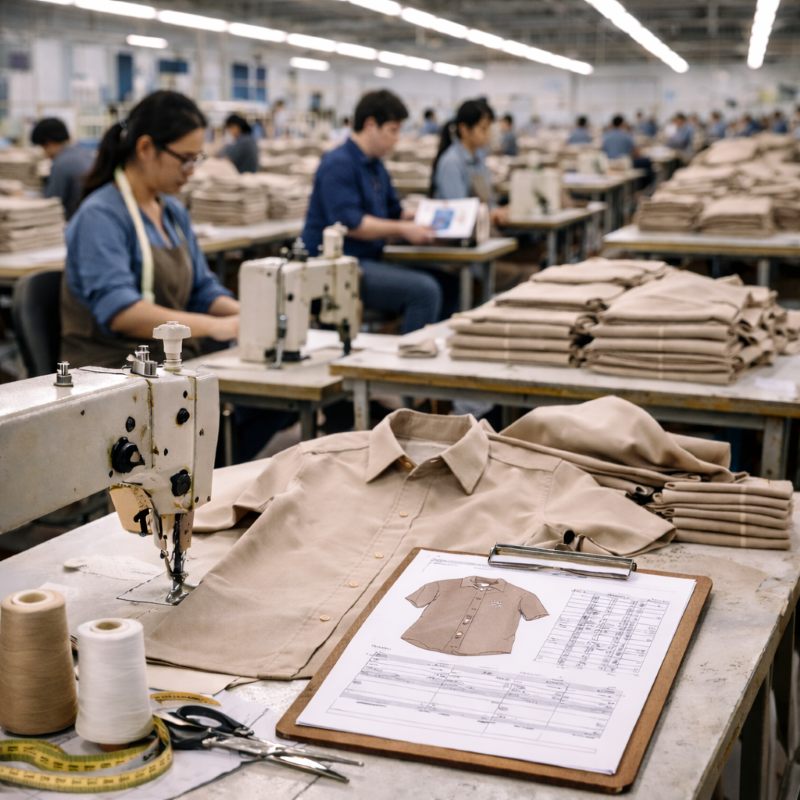
At MADE Apparel Services, we run pattern making, sample development, and production-readiness as one connected workflow rather than as separate transactions. That means the same person who drafts your pattern is the person who fits the sample, marks the revisions, signs off on the final pattern, and prepares the documentation a factory is more likely to accept.
If you are looking for a clothing pattern maker, a clothing sample maker, or both, we can map your product to the right sequence. Start with our pattern-making and sewn prototyping service pages, or book a free consultation, and we will walk you through your next two to three steps before you spend money on either.
Want information like this sent straight to your inbox?
Sign up for our newsletter to receive the latest news, exclusive offers, and insights about our products and services.
You can unsubscribe at any time, and we never share your information with anyone.

Frequently Asked Questions
-
Pattern making creates the 2D technical blueprint of a garment. Sample making constructs a physical prototype from that blueprint. Patterns come first. Samples are how you test and revise the pattern before manufacturing.
-
Usually yes. If your sample was built without an underlying professional pattern, there is no document to revise, grade, or send to a factory. A clothing pattern maker can reverse-engineer a pattern from an existing sample if needed.
-
A clothing sample maker sews a physical prototype of your garment from a pattern. The sample is used to evaluate fit, fabric behavior, construction, and finishing before you commit to a production run.
-
Often yes, and it is usually the most efficient setup. At MADE Apparel Services pattern making and sample development are run by the same person so the pattern updates and fit revisions move in one workflow rather than two handoffs.
-
Most product development cycles include 2 to 3 sample rounds before a pattern is signed off as production-ready. More complex garments (outerwear, structured tailoring, technical performance) often run longer.
-
For a single style, plan on $400 to $1,500 for the first pattern and $200 to $800 per sample round, plus fabric and trims. A typical first style with 2 to 3 sample rounds lands in the $1,200 to $3,500 range before fabric and trims.