
Should Product Development and Manufacturing Be Under One Roof? Guess What: It's Not the Roof That Matters
Most founders don't realize that product development is a separate step from manufacturing. Whether that step happens in-house with the manufacturer or independently isn't what determines whether production goes well. What matters is whether the founder understands the process.
Need help with a project? Free expert guidance is just a click away.
Curious how sewn products are made? Learn more
Going Straight to a Factory Doesn't Skip Development, it Hides it
Founders who work directly with a manufacturer from the beginning often assume that means production is starting. It doesn't. If a founder provides only an illustration or reference sample, development still needs to happen. It just happens inside the factory's process, without being called out as its own step.
What this usually looks like is a first sample that isn't what you expected, and neither is the third or fourth and maybe more. So, if you don't realize that sample iteration is the factory's way of developing, this process can feel very discouraging, but it has nothing to do with how the factory is performing.
Why a Founder Benefits from Understanding What Development Is
Whether product development happens with a factory or with an independent developer, the same core questions still have to get answered: fit, construction, materials, and how the product will actually be made. What changes is transparency and control. Doing development independently means the founder can see it happening and has more say over how it goes, rather than finding out after the fact. That doesn't make independent development automatically the right choice, but a founder should understand the difference between the two before deciding.
What About Ownership of Your Technical Assets?
Whether a founder owns their patterns, or the developer or factory retains them, comes down to the contract terms agreed to at onboarding, and whether the founder asks for those terms before signing. But owning a file and being able to use it are two different things. A founder can legally own a pattern, but if the file only works in one type of software, or was only ever meant to be read internally, that ownership becomes meaningless in practice. Files need to be delivered in a standard format the next developer or manufacturer can actually open, convert, and use.
What Complete Development Looks Like
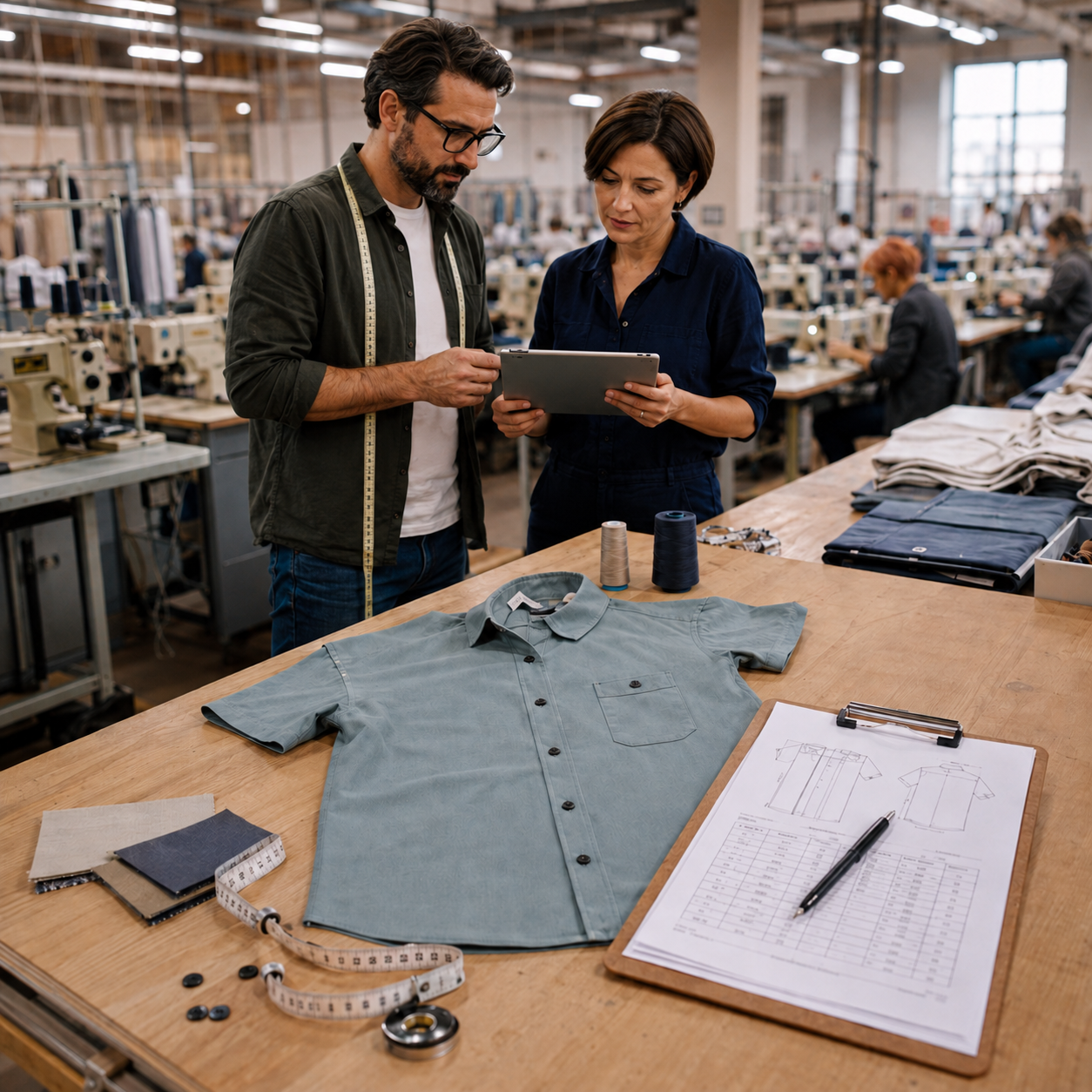
Complete development means three things exist: an approved pattern, a sewn sample made from that pattern, and a tech pack that connects the two. When development is already complete, a manufacturer has clearer information to work from. That can mean fewer unnecessary sampling rounds, discrepancies that are easier to catch, and a shorter path to production.
Bottom Line
Development is a process, and it has to happen first, regardless of who does it or where. Whether it happens with a factory or independently, the choice comes with tradeoffs worth understanding before deciding, and every founder benefits from knowing the difference between the two. If you’re ready to begin the sewn product development process book your free 30 minute video consultation with MADE today.

Want information like this sent straight to your inbox?
Sign up for our newsletter to receive the latest news, exclusive offers, and insights about our products and services.
You can unsubscribe at any time, and we never share your information with anyone.

Frequently Asked Questions
-
No. Development and manufacturing can be done by different parties without one replacing the other. An independent developer hands off a finished pattern, sample, and tech pack, and a manufacturer can go more directly into production.
-
A pattern is the technical template used to cut and construct the product. A sample is the physical version sewn from that pattern to confirm fit and construction. A tech pack is the document that records the details of both, so anyone producing the item has clear instructions to follow.
-
If a founder approaches a manufacturer with only an illustration or reference sample, and the manufacturer starts sampling from that, development is happening as part of that process, even if no one calls it that.
-
Ask who owns the pattern, sample, and tech pack once payment is made, and get it in writing. Also ask what file format those assets will be delivered in, since ownership only matters if the files can actually be opened and used elsewhere.
-
It can be. The location or structure isn't what determines the outcome. What matters is whether development happens as a complete, documented process, and whether the founder understands what's happening and who owns the result.