
What Is a Tech Pack—and What It Needs to Be Ready for Production
If you've ever sent a manufacturer your sketches and a mood board and wondered why they never responded, or why your first sample came back completely wrong, the answer is almost always the same: you didn't have a proper tech pack.
Understanding what is a tech pack, and more importantly what makes one production-ready, is one of the most practical things a founder can do before pursuing manufacturing. This post covers the full apparel tech pack meaning, what has to be in it, and what most brands get wrong.
The Problem Most Designers Hit Before They Ever Reach a Factory
Most factories will quote a garment without a complete tech pack. What’s not always clear is that they’re then making assumptions or taking on parts of the development process themselves, often without full alignment on your end. Some will move forward based on limited information, which can lead to results you didn’t approve or revisions that could have been avoided entirely.
The issue isn't that designers don't know what a tech pack is. It's that they underestimate how much detail a manufacturer actually needs. A sketch communicates an idea. A tech pack communicates instructions.
These are not the same document.
When a brand submits incomplete specs, a few things tend to happen: the manufacturer passes on the order, pads the quote to cover back-and-forth, or makes assumptions in production that result in an expensive first sample round. Any of those outcomes costs time and money that a cleaner tech pack would have prevented.
Tech Pack Meaning — What It Is and Why It Exists
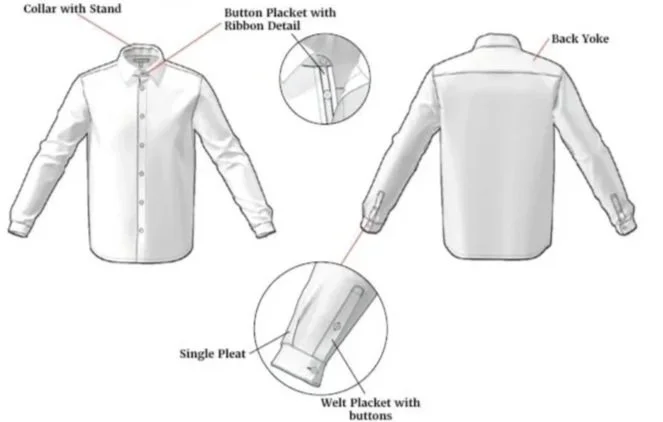
A tech pack — short for technical package — is the complete set of specifications for a garment. It tells everyone who will touch your product exactly how to build it: every measurement, material, construction method, colorway, and finishing detail in one document.
The tech pack meaning goes beyond measurements. It's a communication tool between your brand and every downstream partner: pattern makers, sample rooms, factories, quality control reviewers, and sourcing agents. It's the shared language of production.
Without it, you're asking experienced manufacturing professionals to interpret your vision. That's not how factories work, and it's not how you protect your product.
What a Production-Ready Tech Pack for Clothing Must Include
A tech pack for clothing that gets results isn't just a template with some numbers filled in. Here's what needs to be there.
1. Technical Flat Sketches
Clean, accurate line drawings of the front, back, and side views of the garment. Not a fashion illustration, but technical flats that show seam lines, pocket placement, zipper placement, topstitching, hardware, and any construction detail a sewer needs to reference.
If the sketches are ambiguous, the sewing is ambiguous.
2. Bill of Materials (BOM)
Every material and component listed in one place: main fabric (with content, weight, and finish), lining, interfacing, thread, buttons, zippers, labels, hang tags, and any packaging. Each line item should include a supplier reference if known, the color callout, and the quantity per unit.
A vague or missing BOM is one of the most common reasons a sample comes back with the wrong materials.
3. Measurement Specifications and Grade Rules
This is the measurement chart for the garment with every point of measure called out with a specific number and a tolerance (the acceptable variance). This includes chest, waist, hip, sleeve length, hem circumference, rise, inseam — whatever applies to the garment type.
If you're producing in multiple sizes, grade rules are required. These specify exactly how each measurement steps between sizes. Without them, a factory will either guess or ask you for instructions repeatedly, neither of which moves production forward.
4. Construction Details and Stitch Specs
How the garment is actually assembled: seam allowances, stitch type, stitch count per inch, hem depth, how facings are finished, how pockets are constructed and attached. Factories make these decisions on their own if you don't specify them. Sometimes that's fine. Often it isn't.
5. Colorways and Trim Callouts
Each colorway gets its own specification: Pantone reference numbers for all fabrics and trims, are confirmed separately. If your jacket comes in three colors, your tech pack has three colorway pages, each complete with all trims called out in the correct color for that version.
6. Label and Hardware Placement
Where does the brand label sit? The size tag? The care label? The hang tag attachment point? These seem minor until a factory sews a label into the wrong seam on 500 units. Placement diagrams eliminate the ambiguity.
7. Packaging and Folding Instructions
If you have requirements for how the finished garment is folded, poly-bagged, tagged, or packed for shipment, those go in the tech pack. This becomes critical as order quantities scale.
Common Tech Pack Mistakes That Stall Production (or Kill Your Sample)
Here's what I see most often in tech packs that aren't actually production-ready:
No measurement tolerances. If the spec says 18" chest with no tolerance, a factory doesn't know whether 17.75" is a pass or a defect. You'll either accept production that doesn't fit your standards or reject work that should have been fine.
Vague fabric specs. "Heathered gray jersey" is not a specification. A production-ready apparel tech pack includes fiber content percentage, weight in GSM or oz/yd², knit structure or weave, and any finishing treatment (pre-washed, anti-pill, moisture-wicking). If you want consistent results across multiple production runs, the spec needs to be repeatable.
Missing construction callouts. A sketch shows where a pocket is. The construction note explains how the pocket is assembled, what seam allowance is used, whether it has a stay stitch, and how it's topstitched. Both are required.
No version control. Tech packs get revised, sometimes many times before a garment is approved for bulk. Every page should carry a version number and a revision date. If you're on revision 4 and the factory is working from revision 2, you have a problem that isn't the factory's fault.
What You Need Before You Can Build a Tech Pack
For original garments, a finalized pattern comes before the tech pack, not after it.
The measurement spec page of a tech pack is built from a pattern that has been fit-tested on a sample. If you're writing measurements before a fit sample exists, you're making educated guesses. Those guesses become the instructions a factory follows.
Pattern making services are typically the first step for brands developing a new style from scratch. Once the pattern is approved through fit sampling, all the measurements, construction details, and grade rules get documented into the tech pack.
If you're working from an existing production garment or have an approved sample already, you may be ready to move directly into tech pack creation. The key question is whether your measurements have been confirmed on a real sample, not estimated on paper.
Where to Start If You Don't Have One Yet
If you don't have a tech pack, now is the time to address it.
A few options depending on where you are:
If you need a tech pack built from scratch: Our tech pack services cover the full document — flat sketches, BOM, measurement specs, construction callouts, and colorway pages — built to production standard.
If you want to understand the format before hiring support: A tech pack template walks you through the required sections so you know what you're working toward.
If your pattern isn't finalized yet: Start with pattern making. The tech pack follows from a confirmed pattern , not the other way around.
Most brands who reach production smoothly have one thing in common: they treated the tech pack as a prerequisite, not an afterthought.
Frequently Asked Questions
-
A production-ready clothing tech pack typically includes technical flat sketches, measurement specifications, bill of materials (BOM), construction details, stitch specifications, colorways, trim callouts, label placement, and packaging instructions. The purpose is to give manufacturers precise instructions so garments can be sampled and produced consistently.
-
You can contact manufacturers without a tech pack, but most factories will still need detailed specifications before accurate quoting, sampling, or production can begin. Without a complete tech pack, manufacturers may make assumptions that lead to delays, unexpected costs, or incorrect samples.
-
A pattern is the technical blueprint used to cut and construct the garment. A tech pack is the document that communicates all production specifications, including measurements, materials, construction methods, trims, and finishing details. For original garments, the tech pack is usually built from a finalized, fit-tested pattern.
-
A sketch can help communicate the design concept, but a production-ready tech pack requires detailed specifications that go far beyond visuals alone. If measurements, construction details, fabric information, and fit have not yet been confirmed, additional development work may be needed before the tech pack is ready for manufacturing.
-
Factories use tech packs to understand exactly how a garment should be made. A complete tech pack reduces guesswork, improves quote accuracy, minimizes revisions during sampling, and helps maintain consistency during production.
-
A good apparel tech pack should be detailed enough that a manufacturer does not need to make design or construction decisions on your behalf. Clear specs help reduce production errors, improve communication, and streamline the sampling process.

Want information like this sent straight to your inbox?
Sign up for our newsletter to receive the latest news, exclusive offers, and insights about our products and services.
You can unsubscribe at any time, and we never share your information with anyone.