
If you are preparing to develop a sewn product, one of the first questions you will probably ask is: how much does a tech pack cost?
It is a fair question, but it is also one of the most misunderstood parts of apparel development.
Many founders assume tech pack pricing should be simple. They expect a flat rate because they see the tech pack as a document. In reality, the cost of a tech pack depends on how much product development work has already been completed before the documentation begins.
A production-ready tech pack is not just a sketch with a few notes added. It is a technical manufacturing document built from real development decisions, including patterns, measurements, construction details, materials, and fit standards. When those inputs are incomplete, the time and technical judgment required to build the document increases. If you are evaluating professional tech pack services, it is important to understand that pricing reflects more than just document creation. To give you a starting point: a pattern-only tech pack typically starts at $750, and a full tech pack starts at $1,000. Where your project falls within that range depends on the factors below.
Need help with a project? Free expert guidance is just a click away.
Curious how sewn products are made? Learn more
Why Tech Pack Pricing Varies So Much
There is no universal tech pack price because not every product starts from the same level of readiness.
One founder may have an approved pattern, finalized materials, a sewn sample, and a clear size range. Another may only have a sketch and a general idea of the garment. Both may need a tech pack, but they are not paying for the same level of work.
That is the core reason fashion tech pack costs vary.
In most cases, you are not just paying for pages in a PDF. You are paying for the technical development knowledge required to turn a product idea into clear production instructions. A proper tech pack gives manufacturers the information they need to quote, sample, and produce with fewer assumptions.
This is also why experienced development teams usually view tech pack creation as part of a larger process. If you look at the broader apparel product development process, documentation only works well when the product itself has already been thought through.
1. Product Complexity
The biggest factor affecting tech pack cost is product complexity.
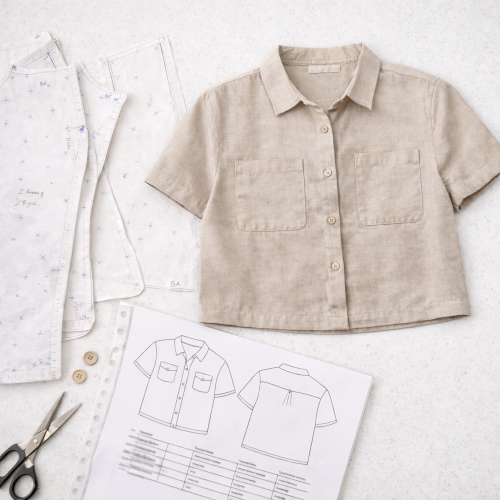
A basic knit tank is not documented the same way as a lined jacket with multiple panels, specialty trims, closures, and construction details. As garment complexity increases, the documentation becomes more detailed, and the number of decisions that must be recorded goes up.
Complexity may include:
Multiple pattern pieces
More seam and finishing details
Functional design elements
Specialty materials or trims
More complicated construction sequencing
Branding and label placement requirements
A simple product usually takes less time to document accurately. A more complex product requires more page depth, more technical annotation, and more coordination between garment design and production requirements.
2. How Developed the Product Already Is
This is where a lot of founders misjudge clothing tech pack cost.
If your product has already gone through pattern development and sewn sampling, the tech pack is usually easier to create because many important decisions have already been tested and approved.
If the product is still unresolved, the person creating the tech pack may have to identify missing details, flag contradictions, and make sense of unclear inputs before the document can even be built.
That extra development work affects price.
For example, a tech pack created from an approved sample and finalized pattern is usually more straightforward than one created from:
A rough sketch
Reference photos
Verbal descriptions
Incomplete measurements
Unconfirmed trims or materials
If those decisions haven’t been resolved yet, they typically need to be addressed through pattern making and sampling before documentation begins. Attempting to build a tech pack without that foundation often leads to revision cycles and miscommunication later in production.
3. Number of Sizes and Grading Requirements
If your garment is being developed in one size only, the documentation workload is smaller.
If your product needs a full size range with finished garment measurements, grading rules, and tolerances, pricing will usually increase.
That is because size expansion is not just about adding more rows to a chart. It requires grading logic that aligns with the approved fit intent, body standard, and pattern structure.
Often, the tech pack includes:
Measurement specs across multiple sizes
Tolerances
Graded measurement charts
Size-specific construction considerations
In such cases, the work becomes more technical and time-intensive.
If your garment needs a full size range, pattern grading services may become part of the scope alongside the tech pack. Broader textile standards can also influence how measurements, tolerances, and sizing details are documented.
4. Detail Level Required by the Manufacturer
Not all manufacturers ask for the same level of documentation.
Some factories can work from a leaner set of instructions if they know the product category well and have a close working relationship with the brand. Others need very detailed manufacturing documentation to quote accurately and execute consistently.
A more detailed tech pack may include:
Technical flats
Bill of Materials
Measurement specification charts
Pattern parts list
Cut quantities and cut direction
Stitch and seam specifications
Construction sequence
Label placement
Packaging or finishing notes
The more detail needed, the more time it takes to prepare the document properly.
5. Whether Existing Documentation Needs to Be Cleaned Up
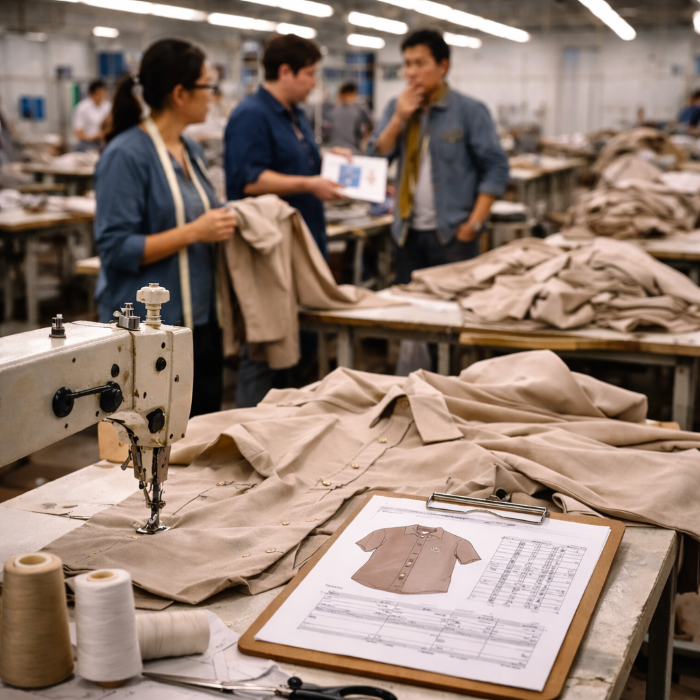
Sometimes a founder already has a tech pack, but it is incomplete, inconsistent, or not detailed enough for production.
In that case, the question is not really how much a tech pack costs from scratch. The question is how much work is required to review, correct, and upgrade the existing documentation.
This can affect pricing in different ways.
A lightly edited document may only need clarification in a few areas. A poorly built file may need to be rebuilt almost entirely because key information is missing or the structure does not align with the actual product.
This is one reason low-priced tech pack offers can become expensive later. If the document is not technically sound, the brand often ends up paying again through revisions, sample delays, or redevelopment.
6. Materials, Trims, and Construction Specificity
The more material and trim specificity a garment requires, the more documentation work is involved.
For example, pricing may rise if the product includes:
Multiple fabrics
Linings
Specialty closures
Elastic applications
Binding or taping
Hardware
Custom labels
Decorative stitching
Print or embellishment placement
Each of these elements needs to be documented clearly enough that a manufacturer does not have to guess.
When material or construction decisions are still unclear, they should be resolved during development so the tech pack reflects what was actually tested, not what is assumed.
7. Revisions and Collaboration Needed During the Process
Tech pack pricing is also influenced by how many revisions are expected.
If the garment is already approved and the scope is clear, the process is more efficient.
If the project still requires active decision-making during sampling, pricing may increase because the development process becomes more iterative. This may include:
Clarifying construction decisions
Updating measurements
Revising BOM details
Adjusting notes after review
Aligning changes with pattern or sample updates
This is normal in product development, but it does change the amount of labor involved.
Founders should be careful not to compare a highly collaborative technical documentation process with a low-cost one-time file creation service. Those are not the same thing.
So, How Much Does a Tech Pack Cost?
The honest answer is that tech pack pricing depends on scope, and you get what you pay for. A simpler product with resolved development inputs will usually cost less than a technically complex garment that still has missing decisions.
Instead of looking for the cheapest number, it is better to ask what is included and what stage of development the pricing assumes.
A useful quote should clarify:
Whether the product is already developed enough for documentation
What level of detail is included
Whether grading is part of the scope
How revisions are handled
What files or inputs are required to begin
If those points are not clear, the price alone does not tell you much.
What Founders Should Prepare Before Requesting Tech Pack Pricing
If you want a more accurate quote, prepare as much of the following as possible:
Clear product sketches or reference images
Product description and intended use
Approved sample, if available
Pattern files, if available
Fabric and trim information
Size range
Measurement expectations
Branding and label details
Any existing documentation already created
The more complete your inputs are, the easier it is to determine what level of work is actually needed. If these inputs are not yet established, that typically indicates development work should happen first before moving into tech pack creation.

Cheap Tech Packs Often Cost More Later
This is the part many founders learn the hard way.
A low-cost tech pack may look like a savings upfront, but if the document leaves room for interpretation, the cost usually comes back later through:
More factory questions
Misunderstood construction details
Incorrect samples
Extra revisions
Delayed production
Rework across patterns, specs, and materials
The goal of a professional tech pack is not just to create a file. It is to improve communication and reduce production risk.
Final Thoughts
If you are asking how much a tech pack costs, the better question may be: how developed is my product, and what level of documentation do I actually need?
Tech pack cost is shaped by complexity, completeness, grading, construction detail, and revision needs. The more technically resolved your product is before documentation begins, the more efficient the process usually becomes.
A strong tech pack is not the starting point of development. It is the result of it.
If you are preparing for sampling or production and want clarity on scope, review our professional tech pack services or learn more about the apparel product development process before moving forward. If you want direct guidance on your product, you can schedule a free video consultation.
Want information like this sent straight to your inbox?
Sign up for our newsletter and receive the latest news, exclusive offers, and insights about our products and services.
You can unsubscribe at any time, and we never share your information with anyone.
Frequently Asked Questions
-
Tech pack cost for apparel depends on the complexity of the product, how much development work has already been completed, the number of sizes included, and the level of technical detail required for production.
-
Fashion tech pack pricing varies because some garments are simple and already resolved, while others still require technical clarification before documentation can be completed.
-
Sometimes, but often not. If the tech pack is missing important construction, measurement, or material details, factories may make assumptions that lead to sample issues and production mistakes.
-
Not always. Some tech pack quotes include grading and size specs, while others price that work separately. It depends on the provider and the development stage of the product.
-
Yes, but the cost and scope may increase if important technical decisions have not been resolved yet. A sketch alone usually does not provide enough information for full production-ready documentation.
-
The best starting point is a clear product concept, reference images or sketches, any existing sample or pattern files, material information, and your planned size range.
