

Build it right before you build it at scale.
Tech Pack Services for Sewn Goods and Apparel Production
Clear, production-ready documentation that allows your factory to build accurately and consistently.

Who This Is For
Production Suffers Without Accurate Tech Packs
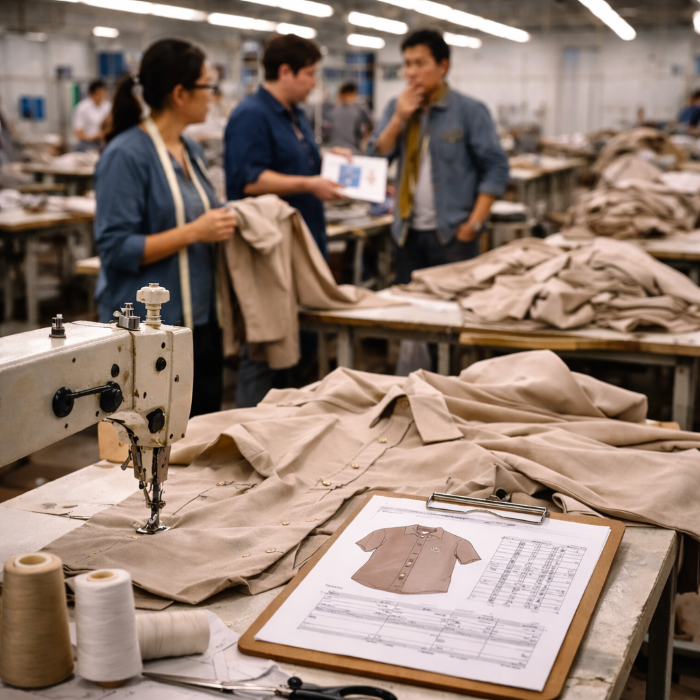
A tech pack created without a developed pattern and sewn sample does not fully define how a garment should be built. If you’re preparing to move into production with only illustrations, a measurement chart, and a list of materials, key information is still missing. This leaves factories to determine how the product should be built, which introduces risk into every stage of production.
You’ll typically see this play out as:
Repeated questions from the factory about materials, measurements, or construction details
Inconsistent samples due to unclear or undefined specifications
Additional sampling rounds needed to resolve decisions that were not established earlier
Misalignment between patterns, grading, and measurement charts, creating sizing issues
Difficulty maintaining design intent across different manufacturers or teams
Increased production risk due to incomplete or unverified information
What You Need
Production Documentation is Built From Proven Development
A production-ready tech pack reflects decisions that have already been confirmed through a developed pattern and sewn sample. this ensures a manufacturer can build your product the first time exactly as you intended. A properly written tech pack includes:
Finished garment measurement specifications, grading, and tolerances that communicate fit intent, supported through Grading Services
Pattern parts list indicating cut quantities, cut direction, size range, and fabrication
Seam specifications, stitch types, and finishing details confirmed through sampling
Construction sequence established through Sewn Protoyping
By following a structured Product Development Process first and writing your tech pack last, you reduce production risk, lower costs, and improve timelines.
What You Get
Clear, Production-Ready Documentation—Without Guesswork
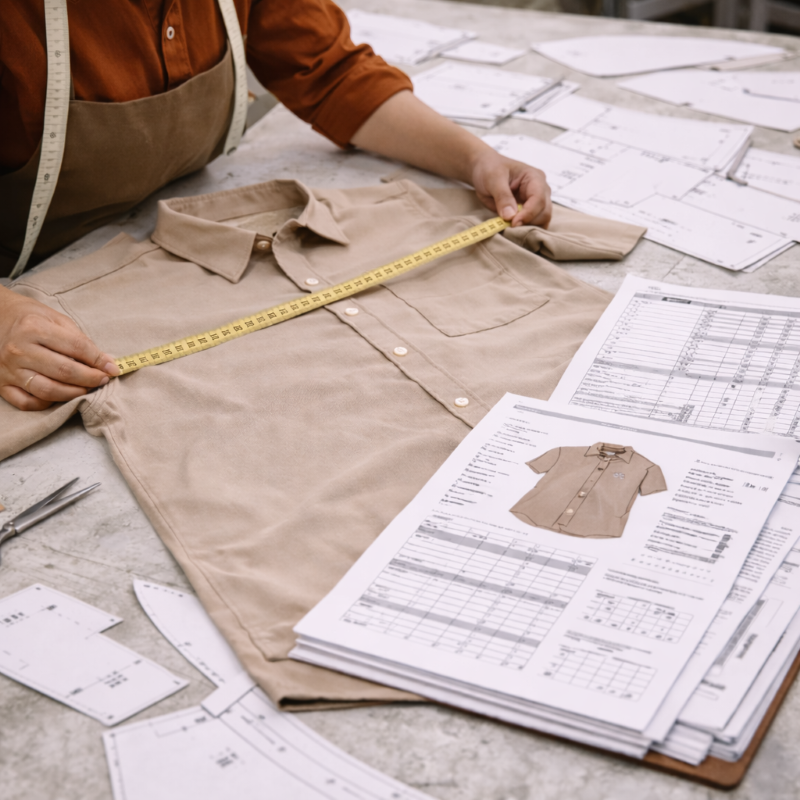
Each tech pack is developed from your final pattern and sample, to the documentation reflects how your product is actually built. The goal is to reduce manufacturing errors, minimize sampling delays, and avoid costly revisions caused by incomplete or interpretive documentation.
Your tech pack will be a minimum of 12 pages and includes:
3D technical garment schematics derived from approved patterns and samples
A complete Bill of Materials (BOM), including fabrics, trims, labels, closures, and hardware
Measurement specification charts across all sizes, including tolerances, based on an approved body standard
Pattern parts list that matches the piece labeling in your pattern file, including cut quantities, cut direction, size range, and fabrication
Seam specifications, seam allowances, stitch types, and finishing details validated through sampling
Construction sequencing and assembly instructions that reflect how the garment is actually built
Label placement and branding details aligned with the approved design
Each tech pack is professionally formatted and tailored to your specific garment and development decisions, so your product can be sampled and produced correctly without assumptions. It provides a reliable reference for use across teams, vendors, and future production runs.
Ready to turn finished development into documentation?
It’s nice when everything is already figured out.






Client Reviews
Frequently Asked Questions
-
Tech pack services provide detailed manufacturing documentation for sewn goods and apparel. A professional tech pack includes technical sketches, measurements, grading, material lists, and construction instructions that manufacturers use to sample and produce garments accurately.
-
Professional tech pack services typically include:
• Scaled sketches
• Bill of Materials including fabrics, trims, and hardware
• Measurement specification charts
• Construction sequencing
• Seam and finishing details
• Label placement and branding specificationsThese elements ensure your garment is production-ready before sampling begins.
-
No. Many manufacturers can begin sampling from a sketch, reference images, or a rough prototype. However, development is not their primary role.
For best results, we recommend working through pattern development and sewn sampling with a professional product developer before engaging a manufacturer—even if that developer isn’t us. Without resolved patterns, fit standards, and construction decisions, factories are required to interpret incomplete information, which often leads to errors, delays, and additional sampling rounds.
-
A tech pack is a comprehensive production document used in apparel manufacturing to communicate all construction, measurement, grading, and assembly requirements needed for accurate and repeatable production. A spec sheet is typically a simplified document that may include only basic measurements, materials, or reference information.
Professional tech pack services document the final, approved state of a product—including construction, grading, and assembly details that can only be confirmed through pattern development and sewn sampling—making them suitable for bulk production.
-
Yes. Tech pack services can document an approved prototype or sewn sample and convert it into complete manufacturing documentation. This is especially useful when preparing to scale production or transfer to a new factory.
-
Tech pack services reduce manufacturing errors by clearly defining every detail before sampling begins. When measurements, materials, seam finishes, and construction methods are documented precisely, factories can execute with confidence and consistency.
-
We offer tech pack review services to evaluate existing documentation. If details are missing, unclear, or inconsistent, we refine the tech pack so it meets professional manufacturing standards and supports accurate production. More information can be found here: Tech Pack Review
-
You should invest in tech pack services before:
• Requesting your first factory sample
• Moving from prototype to bulk production
• Transferring to a new manufacturer
• Scaling your apparel brandClear documentation early prevents costly revisions later.